

Climate Change Can Change the Role of the Maritime Contractor
Sediment dredged from the seabed is not necessarily a waste product. It can be a resource. At the same time, this changes the role of the maritime contractor when dredging, sediment handling and climate adaptation need to be considered together.
A project in Glowe on the German island of Rügen shows what this can look like in practice.
In the autumn of 2025, Høj Nordic Marine Contractor removed 10,321 m³ of sand from the harbor’s navigation channel and harbor basin to ensure better access for vessel traffic.
But the sand was not to be transported away.
Instead, it was pumped directly to the beach, where it was used for beach nourishment as part of coastal protection.
This meant that the same material could solve two different tasks: First, the harbor was dredged, and afterwards, the sand was used to support the coastline.
It is an example of how modern maritime contracting is increasingly about more than the construction task itself.
From dredging to climate adaptation
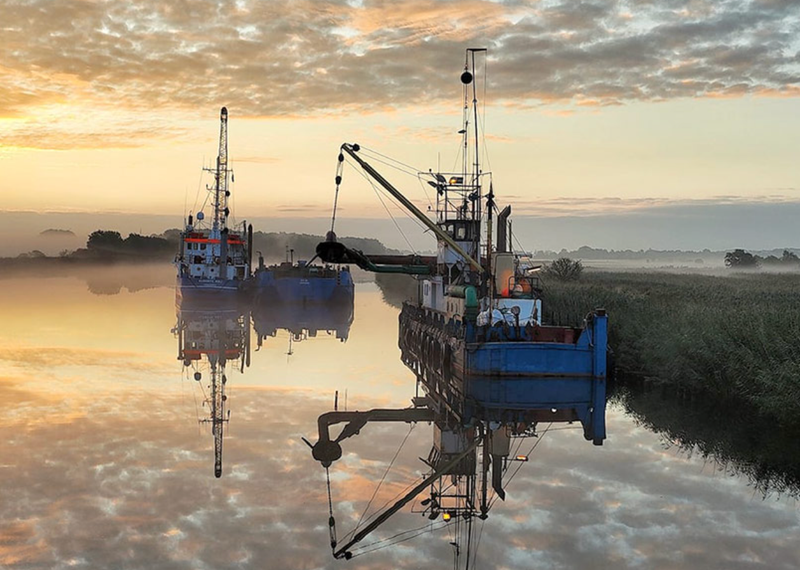
In Glowe, the task was carried out in cooperation between the contractor vessel Lea Høj and the floating pumping station Veluwe.
Lea Høj was responsible for dredging the sand from the seabed, while Veluwe pumped the material directly from the harbor to the beach. This meant that the sand could be moved from a location where it needed to be removed to a location where it could be used.
This approach is becoming increasingly relevant as coastal areas need to adapt to a changing climate.
Rising water levels, changing weather conditions and dynamic sediment movements mean that future maritime projects increasingly need to be considered as an integrated whole from the outset.
This places new demands on the maritime contractor. The role is no longer solely about moving material or establishing structures, but also about creating solutions that make coastal areas and infrastructure more resilient to future challenges.
With a versatile fleet of specialized vessels and many years of experience in dredging, maritime construction works and seabed operations, Høj Nordic Marine Contractor is working with precisely this development.
The maritime solutions of the future are created through the interplay of technical expertise, precision and the ability to combine several disciplines into one integrated operation at a time when climate change is intensifying. From sediment handling and harbor dredging to coastal protection and climate adaptation, Høj Nordic Marine Contractor delivers solutions that support more resilient coastal areas and more robust maritime infrastructure.
Note: The opinions, beliefs, and viewpoints expressed in this article do not necessarily reflect the opinions of DredgingToday.com.